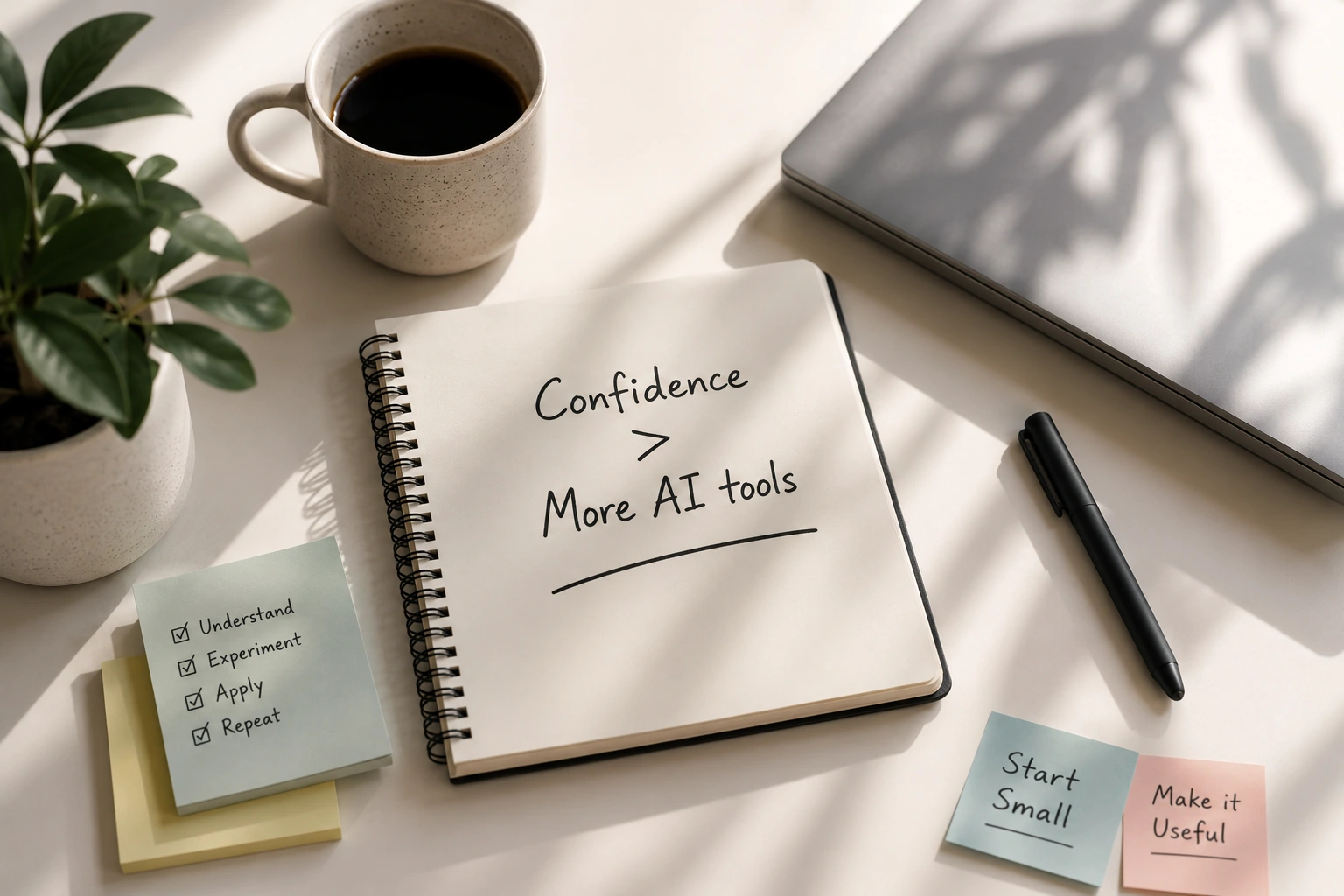
One of the biggest misconceptions about AI adoption is that organizations are struggling because they lack access to tools.
Most already have access.
What they often lack is confidence.
During workshops and conversations, I consistently see the same pattern:
Some worry they are already behind. Others fear using the wrong tools. Some are overwhelmed by the speed of change. Others simply don’t know where to start.
The result is that many organizations remain stuck between curiosity and action.
That gap matters.
The organizations making the most progress are not necessarily the ones with the largest budgets. They’re the ones creating space for experimentation, learning, and practical implementation.
One thing I’ve learned leading AI workshops is that people do not build confidence by watching someone click through slides for 90 minutes.
They build confidence through:
- testing
- asking questions
- experimenting
- comparing outputs
- trying real workflows
- making mistakes in real time
The best workshops often start before the workshop itself.
Before sessions, I usually spend time understanding:
- frustrations
- fears
- goals
- current levels of AI adoption
Because people do not need generic presentations. They need context that feels relevant to their actual work and challenges.
The moment people see AI solve a real problem they recognize, the room changes.
Small moments matter:
- a team member using AI to speed up research
- a founder testing new workflows
- a communications team learning how to brainstorm faster
- a nonprofit exploring operational efficiency
- a professional realizing AI can support their work instead of replace it
- teams sharing AI tools of the week
Confidence grows through use.
That’s why practical workshops and hands-on learning environments are so important right now. People don’t need another abstract explanation of AI. They need to see how it fits into their world.
Recently, I shared some reflections on how I approach making AI more accessible during workshops, including why interactivity and experimentation matter so much in helping people move from hesitation to confidence. You can read that post here: LinkedIn post on making AI accessible during workshops
The future of AI adoption will not be driven by tools alone.
It will be driven by people who feel empowered enough to use them.