One of the most common mistakes I see people make with AI and productivity tools isn’t choosing the wrong platform.
It’s paying for too many of them.
We live in a time when there seems to be a new tool launching every week. Need help writing? There are dozens of options. Want to create videos? More platforms appear every month. Looking for automation, design, research, note-taking, or content creation? The choices are endless.
At first glance, most of these tools seem affordable. Many offer freemium plans, free trials, or introductory pricing that makes it easy to click “subscribe” without much thought.
But that’s where budget creep begins.
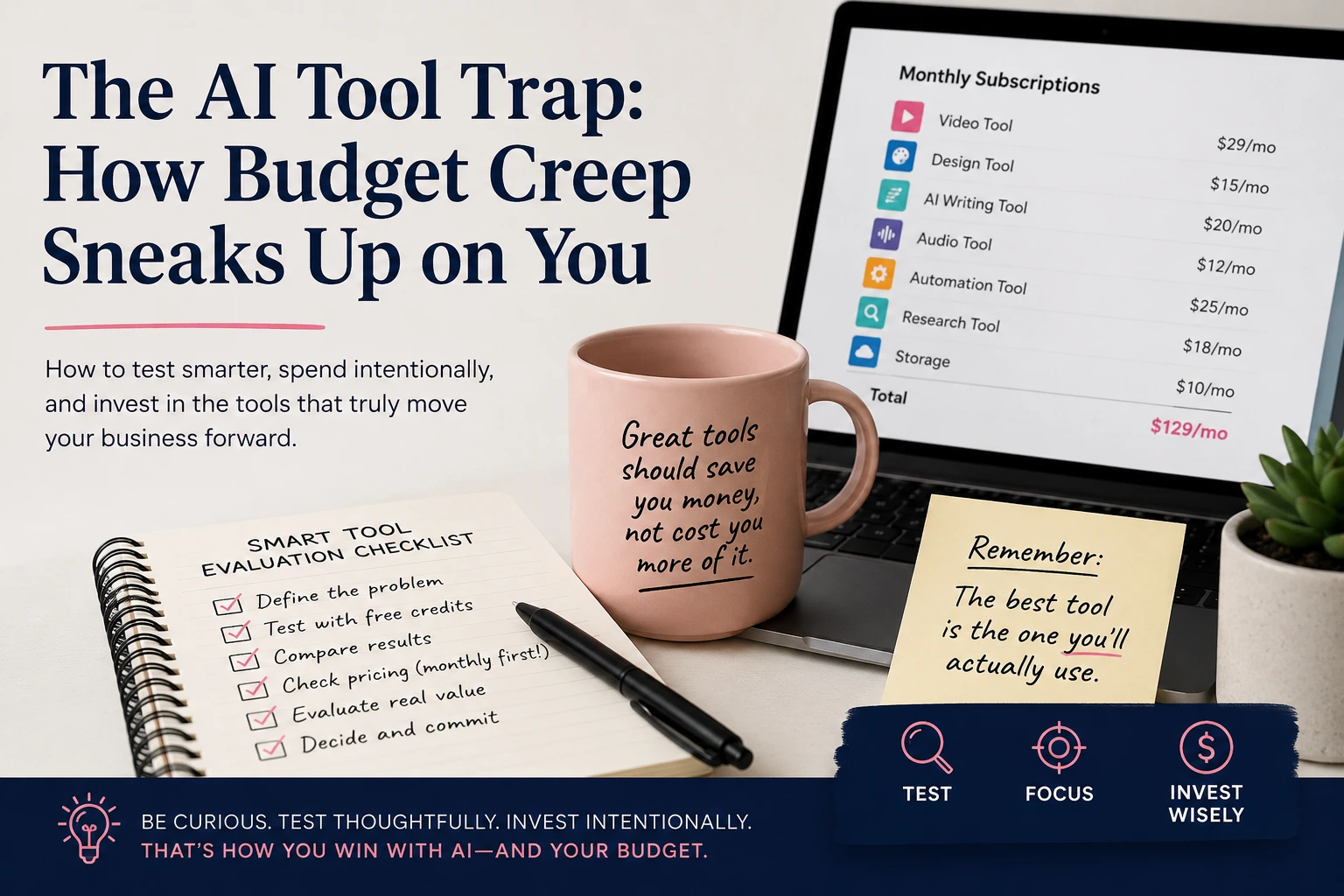
A $10 subscription here. A $20 monthly plan there. Another platform that promises to save time. Before long, you’re spending hundreds—or even thousands—of dollars each year on tools you rarely use.
I’ve fallen into this trap myself.
Recently, I was working on a project that required turning long-form content into short video clips. For years, I’ve used Opus Clip and have generally been happy with the results. But given how quickly the market is evolving, I decided to take a step back and see what else was available.
Rather than automatically renewing or committing to a new annual plan, I tested several alternatives. Most offered free credits or trial access, making it easy to compare features, workflows, and output quality without spending additional money upfront.
After experimenting with multiple platforms, I reached a somewhat surprising conclusion: Opus Clip was still the best fit for my needs.
The important lesson wasn’t that Opus Clip was the winner. The lesson was that I didn’t assume it would be.
I tested before I invested.
In today’s AI landscape, that’s a habit worth developing.
How to Avoid Budget Creep
1. Define the problem before evaluating the tool
Many people start by looking at tools.
Instead, start by defining the problem you’re trying to solve.
Do you need to create short-form videos? Summarize meetings? Generate images? Improve research? Automate workflows?
The clearer the problem, the easier it becomes to identify the right solution—and avoid paying for features you’ll never use.
2. Use free trials strategically
Most modern platforms offer free credits, limited plans, or trial periods.
Take advantage of them.
Run the same task through multiple tools and compare the results. Pay attention not only to output quality but also to ease of use, customer support, integrations, and learning curve.
The best tool isn’t always the one with the most features. It’s often the one you’ll actually use consistently.
3. Avoid annual commitments too early
Annual plans often offer significant discounts, making them seem like the obvious choice.
But a discounted tool you don’t use is still wasted money.
Whenever possible, start with a monthly plan. Give yourself enough time to determine whether the platform truly fits your workflow before committing to a year-long subscription.
4. Audit your subscriptions regularly
Set a recurring reminder every quarter to review your software stack.
Ask yourself:
- What tools am I actively using?
- Which subscriptions overlap?
- What could be replaced by a tool I already have?
- What hasn’t been opened in the last 30 days?
You may be surprised by how many subscriptions are quietly renewing in the background.
5. Focus on outcomes, not features
Tool companies are excellent at marketing features.
But features don’t create value. Outcomes do.
The question isn’t whether a platform can do ten things. The question is whether it helps you accomplish the one thing you actually need.
A simpler tool that solves your problem effectively is often more valuable than a sophisticated platform packed with capabilities you’ll never touch.
The Bottom Line
Experimentation is essential. New tools are being launched at an incredible pace, and some genuinely can save time, improve quality, and increase productivity.
But innovation doesn’t require impulsive spending.
The most successful professionals I’ve worked with don’t chase every new platform. They stay curious, test thoughtfully, and invest only after they’ve validated that a tool fits their workflow.
In a world filled with free trials, freemium plans, and endless subscriptions, one of the most valuable skills you can develop isn’t finding the next great tool.
It’s knowing when not to buy one.